













Using a Strategic Roadmap to Drive Employee Engagement
Everybody feels the need to have a purpose in the world. This is why successful people continue to work long past retirement age, and at the other end of the spectrum, young unemployed individuals can feel completely disenfranchised from the world.
The same applies to your employees. If people are turning up for work day in and day out but don’t really understand or even care about their role in the organisation’s overall success, do you think that they will give everything they have, or do you feel that they will be going through the motions?

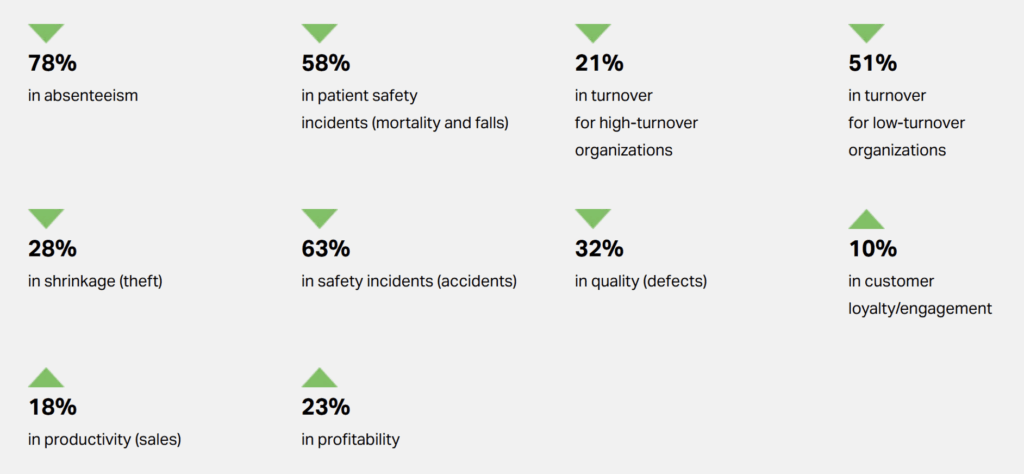
Think back to the last time you left a job. Before you left it, did you feel completely motivated, or were you going through the motions? I think most would have been going through the motions. Engaged employees produce better business outcomes than their less involved counterparts, across industries, company sizes, and nationalities, in both good and bad economic times. According to Gallup, only 23% of employees worldwide and 31% in the U.S. fall in the “engaged” category.
A survey that they compiled demonstrated that engaged employees produced the following benefits:
According to Harvard University, A lack of transparency by leadership can be a cause of disengagement with employees. If employees are unclear about what’s happening within the company, it can be difficult for them to feel truly involved.
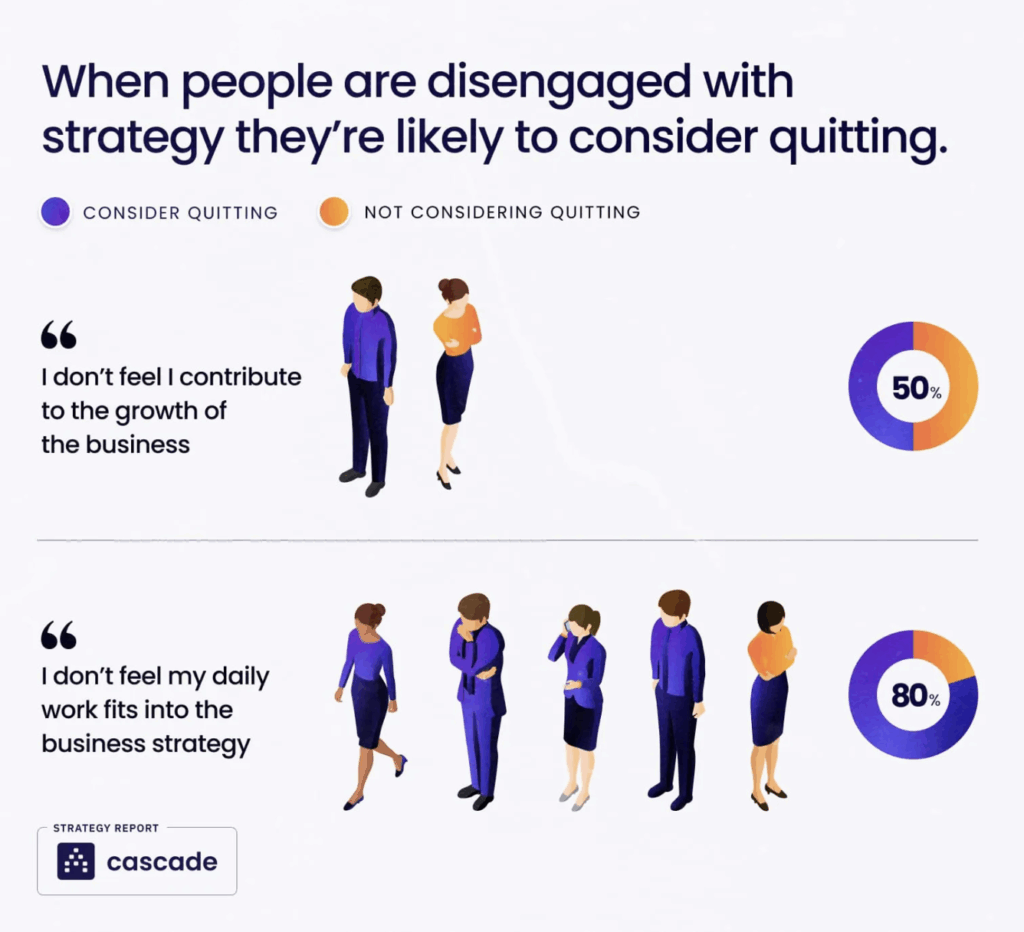
One reason for this can be attributed to strategic planning. Have you ever read a strategic plan that you did not write? Few employees are involved in the strategic planning process, and even fewer actually read it. Professors Robert Kaplan and David Norton found that only 5% of employees understand their company’s strategy. They also suggest that employees are reluctant to engage with a strategic plan because they perceive the document as dry or overly complex, lacking a clear connection to their individual roles, and exhibiting a general lack of engagement with long-term goals. In short, there is a feeling that the strategic plan is being done to them rather than with them, which contributes to 97% of satisfied employees report that they work towards shared goals, while only 38% of unsatisfied employees say the same
"
"Promoting a strategy-focused culture helps employees stay focused on priorities. A strategy-focused company has a higher chance of building a strong culture because employees feel part of the overall goal."
"
Guillermo Hermosillo Cue
Global Innovation Director,
Burger King
There are some significant supporting facts:
- In a survey of C-level executives, 88% say executing strategic initiatives successfully is “essential” or “very important” for their organisations’ competitiveness over the next three years (Economist)
- Yet of those same executives, 61% acknowledge their firms often struggle to bridge the gap between strategy formulation and its day-to-day implementation. (Economist)
- 60% of organisations don’t tie financial budgets to strategic priorities. (Harvard Business Review)
However, this can be overcome if a strategic plan can be turned into a strategic roadmap. Instead of a 30-page, 5,000-word PDF, you get an on-page view that is both interactive, customisable, and most importantly, relevant.

Relevance:
One of your key strategic objectives is to open a sales office in a new territory. To do that, it would involve cross-collaboration with numerous departments, including legal, sales, marketing, administration, and product. However, does Jim in legal know that setting up an entity in Sweden is critical for the company’s future success? Or has he been asked to do what feels like a mundane task? Does Jenny in the product team know that setting up a Swedish language pack is critical for the launch date, or is it just another item for the backlog? These items are too granular for a strategic roadmap, but the point remains that if these employees know what their work is leading to, it will help increase engagement.

Tailored Communication.
One of the main issues with a strategic plan, and this is true of most strategic plans, is that it is often a case of one size fits all. The plan is the same for any employee at any level. Having read numerous plans over the years, one cannot help but feel that they are written for the people who wrote them and analysts whose job it is to analyse a company, indeed, not employees. However, you can create a strategic roadmap that is customisable and relevant, if not at an individual employee level, then certainly at a departmental level. You can show your team what everything is leading to and also show what will be affected if the work is not completed. Will Jim know that Jevon cannot start marketing until the company is registered in Sweden?

Interactivity. Has anyone ever come across an interactive strategic plan? Generally, the most interactive thing is when you click on the download PDF button. Having an interactive roadmap will help increase engagement, as you can tailor it to display the information that the person wants to see, rather than every single piece of information.

It shows success: When an item on the roadmap has been completed, it can be updated to reflect this. You can celebrate success when the plan becomes actionable with a few simple updates. Often, success is hidden away unless it is a very large one. However, constant small successes and communicating them will help you engage your employees.
It is often said that the process of roadmapping is more valuable than the roadmap itself. The roadmap structure helps to organise conversations and capture perspectives, providing a common reference point and resource for strategy. This helps with interaction and communication, building trust and consensus, and reducing conflicts and information asymmetries in the organisation.
(Dr Robert Phaal, University of Cambridge)
Try it for free
Experience the difference Konexis can make to your strategic communication. Get started and try our roadmap tool for free with a one month trial.
