













Is Your Transformation Map Fundamentally Flawed?
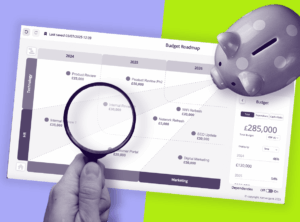
If you search for “transformation map” images online, you’ll soon notice a fundamental flaw… they might look impressive, but they lack financial context. Whether you’re exploring strategic roadmaps, portfolio roadmaps, or transformation maps (T maps), the issue remains consistent—beautifully designed timelines rarely accompanied by clear financial insights. At best, you might find a neatly designed PowerPoint template devoid of real-world budgeting.

At Konexis, we know that senior executives prioritise financial clarity above all else. Before evaluating the strategic value of any initiative, executives consistently ask one question first “How much will this cost?”. Most roadmap tools on the market neglect this critical element, focusing instead on timelines, dependencies, and strategic alignment—all essential features, but incomplete without financial context. This omission is extremely harmful to both you and your transformation roadmap’s credibility.

The Credibility Gap
Transformation roadmaps without financial details will fail to meet the demands of senior management. Executives operate under constant pressure to balance numerous competing priorities within tight budget constraints. Without explicit cost estimations, your roadmap risks being viewed as purely a speculative wish list rather than a credible strategic plan that deserves serious consideration and funding.
Even by including high-level cost estimates, your roadmap’s credibility will be significantly boosted. While detailed financial calculations may exist in separate documents, clear links between your roadmap and detailed budgeting information are essential. Effective transformation maps tell a cohesive financial and strategic story, tailored precisely to the needs of senior stakeholders.

CapEx or OpEx? The Critical Distinction
Understanding whether initiatives fall under Capital Expenditure (CapEx) or Operational Expenditure (OpEx) is crucial. This distinction impacts prioritisation, approval processes, tax planning, cash flow management, and overall investment strategy. Companies typically maintain distinct budgets and approval workflows for each, making it essential to clearly categorise initiatives within your t map to ensure productive, informed discussions.

The Importance of Effective Prioritisation
Strategic portfolios often contain more initiatives than available funds. Without clear visibility into associated costs, prioritising initiatives becomes problematic. Constantly switching between financial spreadsheets and strategic roadmaps disrupts stakeholder conversations and impedes effective decision-making.
Integrating financial data directly into your roadmap provides immediate clarity and empowers informed prioritisation decisions. Consider a practical scenario: “We have identified 50 initiatives with a total estimated cost of £35 million, but our available budget is only £10 million.” Instantly, the prioritisation conversation moves from theoretical to actionable.
The most effective transformation maps integrate financial insights with other critical factors, including dependencies and strategic alignment, to enable genuinely informed decision-making rather than guesswork.

Enhancing Stakeholder Communication
In your weekly, monthly, and/or quarterly update meetings, attention will generally focus on those initiatives where the status is “red” or there’s some other form of problem. These problems frequently include overspending against budget, which needs to be demonstrated on the roadmap itself, not just as an isolated data point on a dashboard. The reason is that an overrunning initiative within a portfolio is likely to have knock-on consequences that stakeholders need to understand immediately. Roadmaps that lack direct financial insights make it difficult for stakeholders to quickly grasp broader implications. Integrating budget status within your roadmap allows stakeholders to understand the immediate and cascading impacts of overspending or delays.
This integration transforms stakeholder meetings from reactive crisis management into proactive strategic discussions. Stakeholders can immediately see problems, their wider implications, and quickly engage in informed conversations about re-prioritisation, resource allocation, and scope adjustments.

Industry Best Practice: Financial Integration
Industry best practice dictates that credible, transformation maps must include financial context. Despite this, many organisations still rely on fragmented tools that separate financial data from strategic plans, resulting in inefficiencies and incomplete decision-making.

The Konexis Solution
Konexis addresses these critical flaws efficiently. Within hours of onboarding, Konexis delivers robust financial insights embedded directly into your strategic roadmap:
- At-a-Glance Financial Tracking: Easily visualise proposed budgets, actual spending, and remaining funds.
- Clear CapEx and OpEx Categorisation: Align initiatives accurately for effective budgeting and reporting.
- Stakeholder-Specific Financial Visibility: Tailor budget transparency based on stakeholder requirements.
- Global Currency Support: Instantly convert between local currencies and 17 major currencies, enhancing global collaboration.
- Drill-Down Functionality: Access detailed financial breakdowns from summary views without losing strategic clarity.
- Integrated Strategic and Financial Planning: Seamlessly combine financial insights with dependency mapping and strategic prioritisation.
By embedding financial transparency into your transformation map, Konexis ensures your roadmap becomes credible, actionable, and truly transformational.
Schedule a call to discover how Konexis can revolutionise your transformation roadmap today.
Try it for free
Experience the difference Konexis can make to your strategic communication. Get started and try our roadmap tool for free with a one month trial.
