Learn how Konexis developed from an idea for a client to a pioneering tool in visual communication.
At Konexis, our team is focused on continually creating, developing and refining the tool to be always at the forefront.
Learn more about Konexis and the current state of visualisation
Need help using Konexis? We’ve got you covered!
For any questions you may have about Konexis
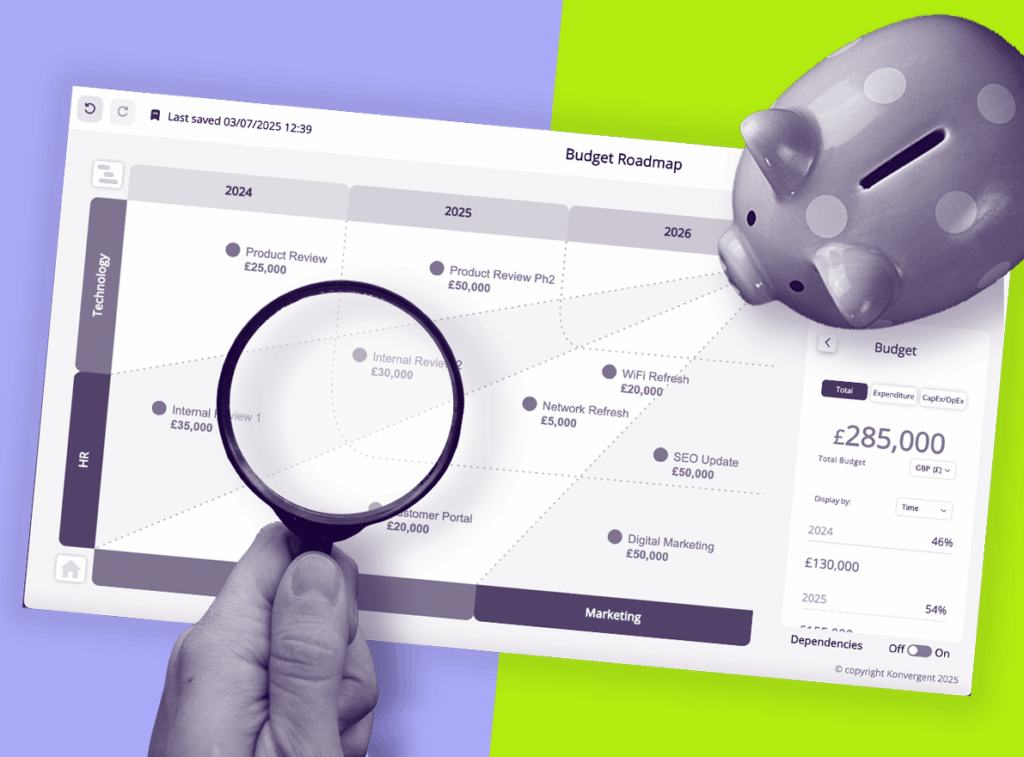
A Strategic roadmap is a powerful tool for vision, alignment, and action. But too often, organisations stop short of embedding one of the most vital factors of execution: budget.
Learn how Konexis developed from an idea for a client to a pioneering tool in visual communication.
At Konexis, our team is focused on continually creating, developing and refining the tool to be always at the forefront.
Learn more about Konexis and the current state of visualisation
Need help using Konexis? We’ve got you covered!
For any questions you may have about Konexis
A Strategic roadmap is a powerful tool for vision, alignment, and action. But too often, organisations stop short of embedding one of the most vital factors of execution: budget.
A Strategic roadmap is a powerful tool for vision, alignment, and action. But too often, organisations stop short of embedding one of the most vital factors of execution: budget. According to PwC, fewer than 40% of organisations say their strategic planning and budgeting processes are tightly linked. This disconnect leads to misaligned priorities, blind resource allocation, and roadmaps that look compelling—but lack financial viability.
At Konexis, we believe budgets aren’t just numbers—they’re signals. They reveal what an organisation values, where it’s willing to commit, and how prepared it is to adapt. A true strategic roadmap must include budgetary context to inform not just what you want to do, but what you can do—and why.
Without financial context, roadmaps risk becoming little more than ambitious illustrations. Embedding budget data transforms them into decision-making platforms that help to guide investment with purpose and accountability.
Here are key ways including budgets can help you elevate roadmap maturity and strategic impact:
Embedding budget data—such as CapEx, OpEx, funding sources, or benefit forecasts into your roadmap enables leadership to evaluate initiatives through both strategic value and financial viability. This holistic view supports clearer trade-off discussions, and better prioritisation.
Gartner highlights that when executives can visualise how investments are distributed across initiatives, confidence increases, duplication is reduced, and wasted effort is minimised. It becomes easier to understand the logic behind why one project proceeds and another is deferred.
When strategic roadmaps include financial data, they speak the language of senior stakeholders. Budgetary information acts as a business case embedded into the strategic narrative—reducing the abstraction and making it easier for decision-makers to engage.
Robust governance requires not just tracking timelines and milestones, but understanding cost, ROI, and resource implications. Budget-aware roadmaps allow for more informed scrutiny, reducing the risk of delayed approvals, missed dependencies, or last-minute financial surprises.
Strategic plans must evolve. Priorities shift, markets move, and new opportunities will come up. McKinsey research shows that companies that actively reallocate resources in response to changing conditions achieve nearly double the returns of those that don’t.
But this agility depends on, you guessed it, financial visibility. If roadmaps are siloed from budget, leaders can’t quickly move investment to where it’s needed most. Embedding budget into the roadmap enables dynamic, informed reallocation—whether it’s ramping up innovation, adjusting spend across regions, or responding to regulatory change.
Roadmaps are not just for executives. When financial context is shared transparently across teams, it strengthens accountability and ownership. Teams understand not only what they’re working on, but how it fits into the broader investment strategy.
This transparency also helps teams make smarter operational decisions—reducing overspend, aligning resource requests, and proactively managing trade-offs.
The most mature organisations no longer see strategy and budgeting as separate exercises. They recognise that strategic roadmaps are most powerful when grounded in financial reality.
So, ask yourself, are your roadmaps driving clarity of your investments or just visualising ambition?
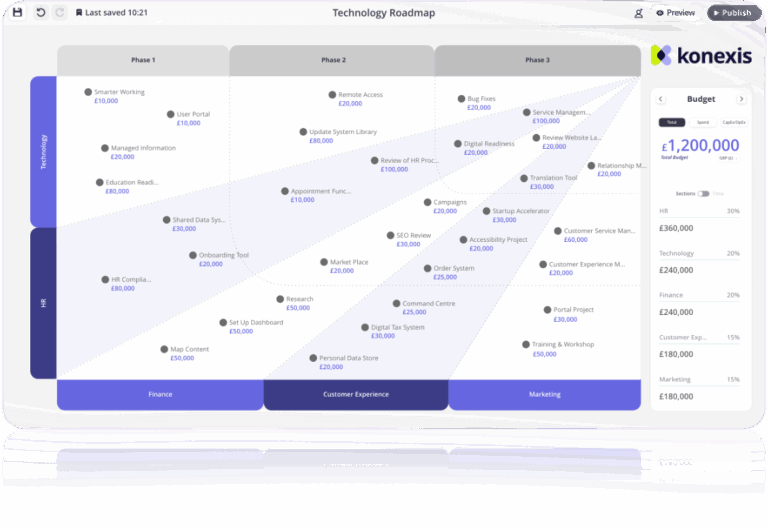
If you’re ready to make budget part of the strategic conversation, Konexis makes it easy to add, view, and tailor financial data across your entire roadmap.
Want to see how it works in practice? Let’s talk about how Konexis can help embed budget into your roadmap.
Experience the difference Konexis can make to your strategic communication. Get started and try our roadmap tool for free with a one month trial.